Launching a token on Solana is exciting, but a quiet chart can sink momentum fast. When traders see low activity, they often scroll past without a second look. That’s where a Solana bot for volume comes in. With the right setup, you can automate trading activity that keeps your token visible and your chart looking alive.
This guide is for project owners, marketers, and crypto enthusiasts who want a fast, practical walkthrough. You’ll learn what a volume bot actually does, the tools you need before you start, and a clear step-by-step process you can finish in under half an hour. We’ll also cover best practices to keep your bot running smoothly. Let’s get started.
What Is a Solana Volume Bot and Why It Matters
A Solana volume bot is an automated program that executes buy and sell transactions on a token at set intervals. Instead of placing trades manually, the bot handles them for you around the clock. The goal is to generate consistent on-chain activity that appears on charts and tracking platforms.
Why does this matter? Visibility drives interest. Here’s what active volume can help with:
- Chart presence: Tokens with steady activity show up more often on DEX trackers and trending lists.
- Trader confidence: A token with movement looks more legitimate than one with flat lines.
- Discoverability: Higher activity can improve placement on aggregators like DEX Screener or Birdeye.
Solana is a natural fit for this kind of automation. Its low transaction fees and fast block times mean a bot can run many trades without burning through your budget. On slower or pricier networks, the same strategy would cost far more.
A quick note: volume bots are tools for visibility and engagement, not a substitute for real product value or community building. Use them as part of a broader strategy, and always follow the rules of any platform you operate on.
Prerequisites and Tools You’ll Need
Before you dive into setup, gather everything in one place. Having these ready means you won’t lose time hunting for details mid-process.
A Solana Wallet
You’ll need a wallet that supports Solana, such as Phantom or Solflare. The bot will connect to this wallet to sign and send transactions. Create a dedicated wallet for the bot rather than using your main holdings. This keeps your primary funds separate and safer.
SOL for Gas and Trades
Fund your bot wallet with enough SOL to cover transaction fees and the trades themselves. Solana fees are tiny, often a fraction of a cent, but trades still need capital. A modest starting balance lets you test before scaling up.
Your Token’s Contract Address
Have the token’s mint address ready. This is the unique identifier the bot uses to target the right asset. Copy it directly from your token listing to avoid typos.
A Bot Service or Platform
You can either run an open-source script or use a managed service. Managed platforms are far quicker for most users and require no coding. If you want a reliable starting point and ongoing guidance, explore this Solana bot for volume resource for setup tips and platform details.
Basic Setup Knowledge
You don’t need to be a developer, but you should be comfortable copying addresses, managing a wallet, and following on-screen instructions. That’s enough to get going.
Step-by-Step Setup Guide
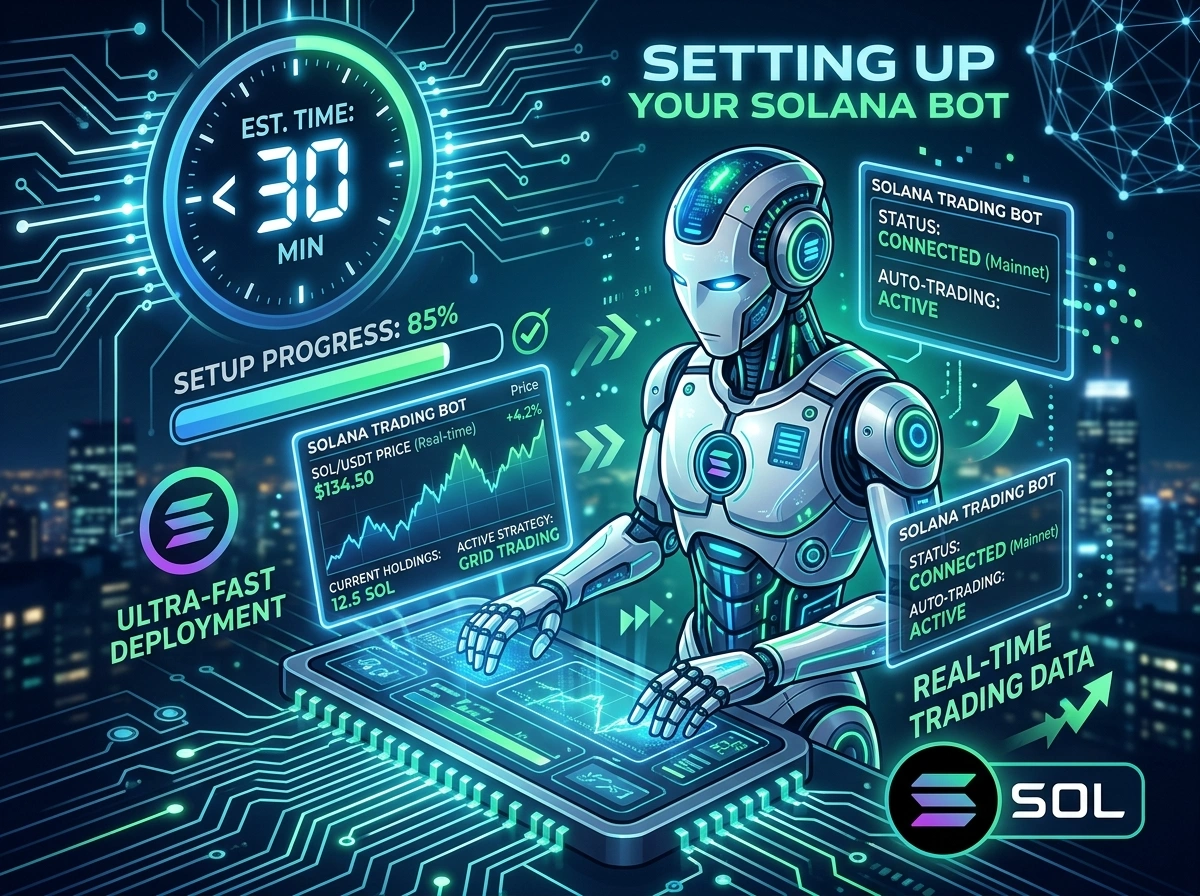
Now for the main event. Follow these steps in order, and you’ll have a working bot in under 30 minutes.
Step 1: Choose Your Bot Platform (5 minutes)
Pick a service that fits your needs. Look for one with clear documentation, transparent pricing, and active support. Sign up for an account and verify your email if required. A managed platform handles the heavy lifting, so you can skip server setup entirely.
Step 2: Connect Your Wallet (3 minutes)
Link your dedicated Solana wallet to the platform. Most tools use a secure connect button that opens your wallet for approval. Confirm the connection and double-check that the correct wallet is linked. Never share your seed phrase with any platform, only approve connection requests through your wallet app.
Step 3: Add Your Token Details (3 minutes)
Paste your token’s mint address into the platform. The system should pull up your token name and current data automatically. Verify the details match your project before moving on. This step ensures the bot targets the right asset.
Step 4: Configure Your Volume Settings (8 minutes)
This is where you shape how the bot behaves. Adjust the following:
- Trade frequency: How often the bot executes transactions.
- Trade size: The amount of SOL or tokens per trade.
- Volume target: Your daily or hourly activity goal.
- Time windows: When the bot runs, useful for matching peak trading hours.
Start conservative. You can always increase activity once you see how the bot performs. Aim for natural-looking patterns rather than rigid, identical trades.
Step 5: Fund and Test (5 minutes)
Deposit a small amount of SOL and run a short test. Watch the first few transactions appear on a block explorer like Solscan. Confirm the trades execute correctly and reflect on your chart. Testing first prevents costly mistakes at full scale.
Step 6: Launch and Monitor (3 minutes)
Once your test looks good, activate the bot for full operation. Keep the dashboard open for the first few minutes to confirm everything runs smoothly. That’s it, your bot is live and generating volume.
Best Practices for Optimizing Bot Performance
Setting up the bot is only half the work. These practices help you get steady, reliable results.
Vary Your Trade Patterns
Identical trades at perfectly even intervals look artificial. Use randomized trade sizes and timing where your platform allows. Natural variation makes your activity blend in with organic trading.
Match Activity to Market Hours
Volume that spikes when real traders are active feels more authentic. Schedule heavier activity during peak hours for your target audience, then ease off during quiet periods.
Monitor Your Budget
Track how much SOL the bot uses each day. Set spending limits so you never exhaust your wallet unexpectedly. Reviewing costs regularly helps you scale sensibly.
Watch Your Metrics
Check tracking platforms to see how your volume affects visibility. If you’re not climbing in rankings, adjust frequency or trade size. Let data guide your tweaks rather than guesswork.
Common Mistakes to Avoid
- Running too much volume too fast, which looks suspicious.
- Forgetting to refill the bot wallet, causing trades to stall.
- Ignoring platform updates that improve security or features.
- Treating the bot as a standalone strategy instead of one piece of your plan.
Conclusion
A Solana volume bot is a fast way to bring life to a quiet chart and keep your token visible to potential traders. As you’ve seen, the setup is straightforward: choose a platform, connect your wallet, add your token, configure settings, test, and launch. The whole process fits comfortably within 30 minutes.
The real difference comes from how you run it. Vary your patterns, watch your budget, and let metrics shape your adjustments. Pair the bot with genuine community building and a solid product for the best long-term results.
Ready to put this into action? Set up your bot today, run a small test, and watch how steady activity changes your token’s presence. What’s the first metric you’ll track once your bot goes live?
