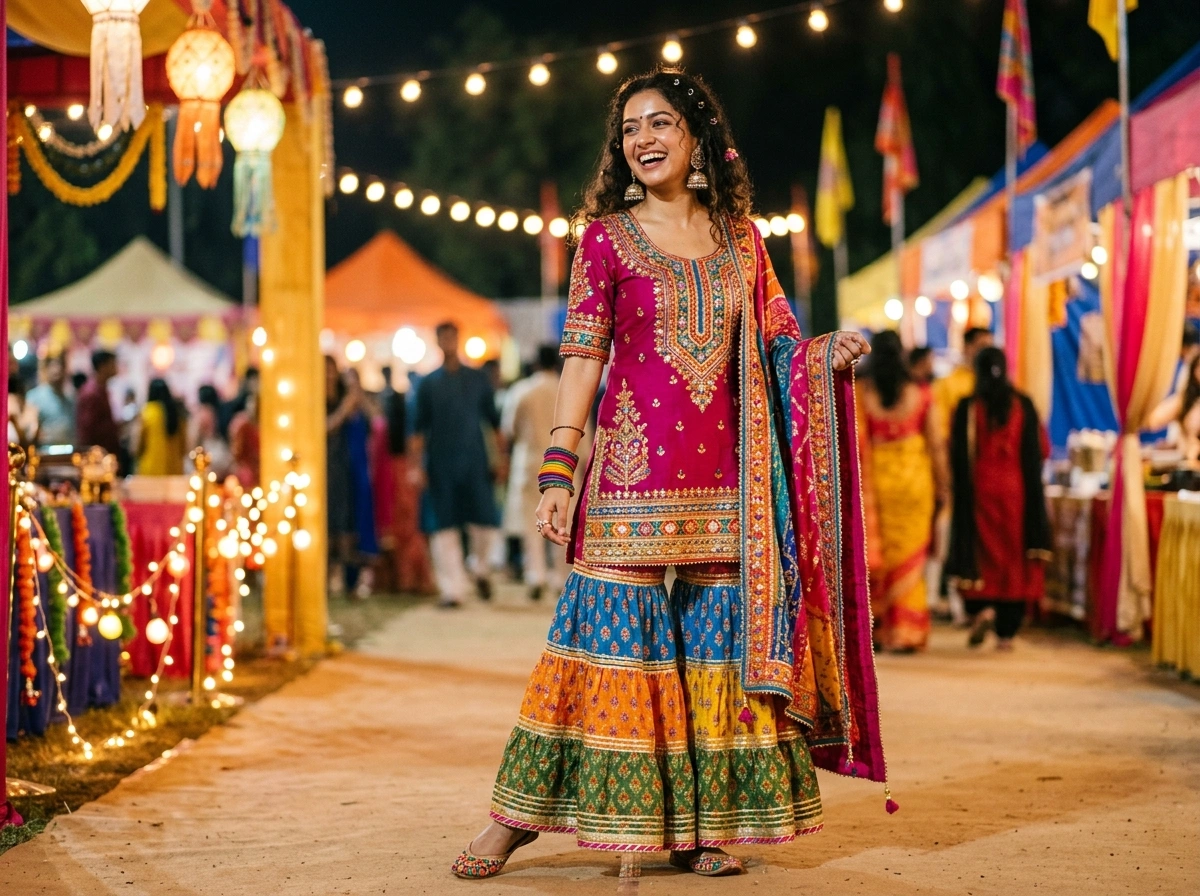
Planning your first festival look can feel overwhelming. You want something that turns heads, feels comfortable for hours of dancing, and doesn’t require a fashion degree to pull off. The good news? There’s an outfit that checks every box without the stress.
A sharara dress is one of the simplest ways for newcomers to nail a festival-ready look. It’s flattering, forgiving, and effortlessly festive. Whether you’re attending a Diwali celebration in Houston, a wedding sangeet in New Jersey, or a cultural festival in your own neighborhood, this outfit makes you look polished with very little guesswork.
Here’s what you’ll learn in this guide:
- What a sharara dress actually is
- Why it’s perfect for first-timers
- Easy styling, fabric, and color tips
- How to accessorize without overthinking it
- The occasions where it shines
Let’s get into it.
What Exactly Is a Sharara Dress?
A sharara is a traditional South Asian outfit with roots in Mughal-era fashion. The standout feature is the bottom: wide, flared pants that flow loosely from the hip or knee, creating a dramatic, skirt-like silhouette. It’s often paired with a short or mid-length top (called a kurti) and a light scarf known as a dupatta.
Think of it as the comfortable cousin of a heavy lehenga. You get the same celebratory volume and movement, but with far more ease. The flared legs mean you can sit, dance, and move freely all night.
For a closer look at the variety of cuts and modern designs available, you can browse a dedicated sharara dress collection to see how versatile the style has become.
Sharara vs. Other Festival Outfits
If you’re new to ethnic wear, the terminology can get confusing. Here’s a quick breakdown:
- Sharara: Flared, wide-leg pants with a top and dupatta. Comfortable and dramatic.
- Gharara: Similar, but the flare starts at the knee with a gathered seam.
- Lehenga: A full skirt, often heavier and more structured.
- Anarkali: A long, fitted-to-flared dress.
The sharara wins for beginners because it balances drama with wearability. You get the wow factor without feeling weighed down.
Why a Sharara Is the Easiest Win for Newcomers
If you’ve never worn ethnic festival wear before, you want something that works for you, not against you. The sharara does exactly that.
It Flatters Almost Every Body Type
The wide-leg cut creates a balanced, elongated silhouette. The flared bottom draws the eye downward and adds graceful movement, while the fitted or semi-fitted top defines your shape. This combination works whether you’re petite, curvy, tall, or somewhere in between.
It’s Built for Comfort
Festivals mean long days, lots of standing, and plenty of dancing. Unlike a tight skirt or a heavy, layered lehenga, a sharara gives you room to breathe. The loose legs keep you cool and let you move naturally. No tugging, no adjusting, no discomfort.
It Requires Minimal Styling Skill
Here’s the part newcomers love most: a sharara comes mostly pre-coordinated. The top, pants, and dupatta are usually designed to match. You don’t have to be an expert at mixing pieces. Slip it on, add a few accessories, and you’re done.
Quick takeaway: A sharara gives you a complete, festive look with very little effort, which is exactly what you need for a first outing.
Choosing the Right Fabric
Fabric makes a big difference in how your outfit looks and feels. The right choice depends on the season and the formality of your event.
For Warm Weather and Daytime Events
- Georgette: Lightweight, flowy, and breathable. Great for outdoor festivals.
- Cotton silk: Comfortable and breathable with a subtle sheen.
- Chiffon: Soft and airy, perfect for hot climates across the South and Southwest.
For Evening and Formal Celebrations
- Silk: Rich, structured, and elegant. Ideal for weddings and receptions.
- Velvet: Warm and luxurious, perfect for fall and winter events in colder states.
- Brocade: Heavier with woven patterns, great for high-glamour occasions.
If you live somewhere with unpredictable weather, georgette is your safest all-rounder. It travels well, resists wrinkles, and works across most events.
Picking Colors That Work for You
Color sets the mood of your entire look. With a sharara, you have a wide range to play with.
Classic and Safe Choices
If this is your first time and you want something foolproof, go with:
- Deep red or maroon: Timeless and festive.
- Royal blue: Bold yet easy to wear.
- Emerald green: Rich and flattering on most skin tones.
Trending and Modern Picks
For a fresh, contemporary vibe, try:
- Pastels like blush pink, lavender, or mint for daytime events.
- Metallics like gold, copper, or champagne for evening glamour.
- Color blocking, where the top and pants are different complementary shades.
A good rule: match your color choice to the time of day. Lighter shades suit daytime, while jewel tones and metallics pop at night.
How to Accessorize Without Overthinking It
Accessories complete the look, but you don’t need a mountain of them. The trick is to keep it intentional.
Start With These Essentials
- Earrings: Statement jhumkas or chandbalis add instant festive flair. If your top is heavily embroidered, keep earrings simple.
- Bangles: A stack of glass or metal bangles adds movement and sparkle.
- Footwear: Embellished flats or low heels keep you comfortable for hours. Juttis are a popular, comfy choice.
Optional Add-Ons
- A small clutch or potli bag to carry essentials.
- A delicate maang tikka or hair accessory for extra polish.
- A statement ring if your other jewelry is minimal.
Styling tip: Pick one focal point. If your earrings are bold, keep everything else understated. Balance prevents the look from feeling busy.
Occasions Where a Sharara Shines
One of the best things about this outfit is its range. A sharara fits comfortably into many celebrations.
Cultural and Religious Festivals
Diwali, Eid, Navratri, and Holi gatherings are all perfect occasions. The festive volume and rich colors match the celebratory energy of these events.
Weddings and Sangeets
Sharara dresses are a favorite for wedding functions, especially sangeets where dancing is the main event. The comfortable cut lets you move all night while still looking dressed up.
Family Gatherings and Parties
Heading to a festive dinner, an engagement party, or a milestone birthday? A lighter sharara in a softer fabric strikes the right note between celebratory and relaxed.
Community and Cultural Events
Across the U.S., cultural showcases and community festivals are growing. A sharara lets you honor tradition while standing out in a crowd.
A Quick Starter Checklist
Before you head out, run through this simple list:
- Chose a fabric suited to the season and event
- Picked a color that matches the time of day
- Selected one statement accessory as a focal point
- Chose comfortable, festive footwear
- Made sure the dupatta is draped securely
Tick these boxes and you’re festival-ready.
Final Thoughts: Your Easiest Festival Win
A sharara dress takes the stress out of dressing for your first festival. It flatters nearly every body type, keeps you comfortable through long celebrations, and comes mostly coordinated so you don’t have to be a styling expert. Add a fabric that suits your weather, a color that fits the moment, and one standout accessory, and you have a complete, head-turning look.
Your next step is simple: pick a color you love, choose a fabric that matches your event, and start there. Everything else falls into place naturally.